Gather: The Foraging App
- 4.3
- Rating
- 10.00K
- Installs
- Free
- Price

 Analysis by App-foxy
I approached Gather: The Foraging App as a practical learning tool rather than a simple catalog of wild foods. Its focus is clear: helping people explore wild plants and mushrooms with more curiosity and better preparation. That makes it appealing for a weekend walk, a nature-study project, or anyone who wants to understand what is growing nearby instead of treating a trail as background scenery.
The app comes from Feral Foraging, LLC and sits in the Education category. It is free to install, has an Everyone age rating, and works on Android devices running version 7.0 or later. That combination makes it easy to try without committing money first, although the presence of optional in-app purchases means the free experience should be considered separately from the paid value.
Learning to look more carefully outdoors
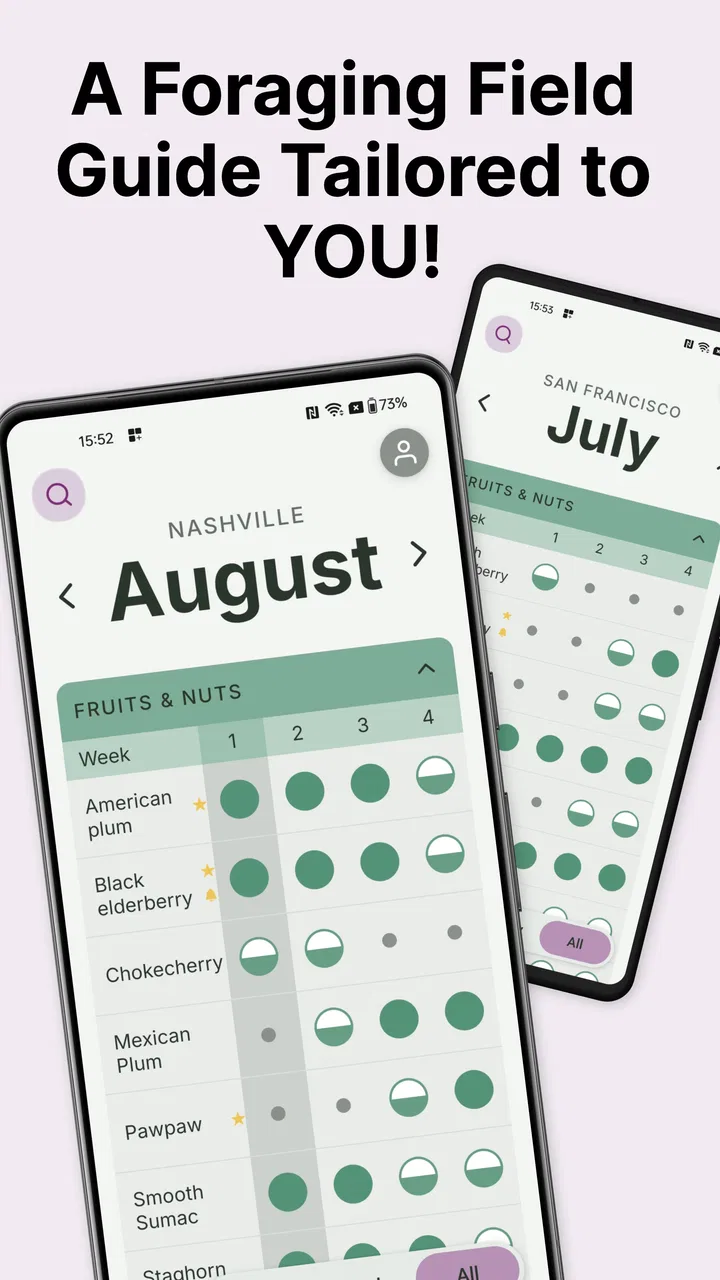
What I like most about the concept is that it encourages a slower kind of outdoor attention. Foraging is not just about spotting something that looks edible. It involves noticing shape, habitat, season, texture, and differences between similar species. An app built around wild plants and mushrooms can support that process by giving a walk a purpose: instead of randomly browsing, I can choose one unfamiliar plant, study it, and then compare what I see in the field with what I have learned.
You May Also Like

 Pandora - Music & Podcasts
Pandora’s Music Is Easy to Start, but Harder to Recover
Pandora’s strength is its low-effort path from a seed to a station. Its weak spot is how much confidence it asks you to place in connection, setup, and quiet recovery.

 8 Ball Pool
 Is Built on Rivalries, Rematches, and Routine
A close look at the rivalries, rematches, shared routines, and unanswered safety questions that turn a quick pool match into a persistent mobile community.

 Samsung Music
’s Quiet Strength Is Playing What You Already Own
Its reach comes less from spectacle than from dependable access to a personal library. That simplicity is both the app’s strongest retention engine and its ceiling.

 AccuWeather: Weather Radar
AccuWeather Review: A Quick, Clear Forecast for Everyday Decisions
For everyday plans, the best forecast is the one you can understand quickly. AccuWeather makes rain timing, radar, and local conditions easy to act on, with a few trade-offs.

 Hill Climb Racing
Why Hill Climb Racing Still Turns Crashes Into One More Run
A tiny car, a bumpy hill and one more upgrade: Hill Climb Racing keeps resurfacing because its simple chaos makes every near-miss feel personal.

 AliExpress - Shopping App
AliExpress Makes Global Shopping Feel Personal, but Shoppers Bear the Risk
AliExpress turns a global marketplace into a pocket-sized discovery engine. Its reach is useful, its shopping loop compelling, and its trade-offs easy to miss.
More From Our News Desk
View All News


That distinction matters because a casual identification app and a responsible learning companion are not quite the same thing. I would use Gather to organize my curiosity and improve my observation skills. I would not treat a single screen or suggested match as permission to eat an unknown mushroom or plant. With wild foods, the cost of a mistake is far higher than the inconvenience of leaving an uncertain specimen alone.
The app’s store summary, “Wild Plants and Mushrooms,” is brief, but it points to a useful range of interests. Someone may be interested mainly in edible plants, while another person may care more about mushrooms, habitat, or general natural history. The broad subject makes the app suitable for beginners who do not yet know which branch of foraging they want to pursue.
How I would use it on a normal walk
A realistic routine would be to open the app before leaving home, decide on a small learning goal, and then use the walk to look for examples rather than collect immediately. For instance, on a neighborhood path I might focus on leaf arrangements and photograph or note a few candidates. Back at home, I could review them with better light, compare details, and keep only the observations I feel confident about.
This workflow is safer and more useful than rushing through a trail while trying to identify everything. It also turns the app into a study aid instead of a digital shortcut. The practical tip here is to separate identification practice from harvesting decisions. A plant can look familiar and still be a poor candidate for consumption when the observation is incomplete.
Another good use is family learning. The Everyone rating makes the app approachable for households, and a parent could use it to encourage children to notice colors, textures, and growing environments. I would make the boundaries very clear: children can observe and ask questions, but any collection or tasting should be handled by an experienced adult who has independently confirmed the species.
Free access and the meaning of paid value
Gather is free to install, so the first decision is straightforward: download it and see whether its approach fits your way of learning. That free entry is valuable for beginners who are not ready to buy a specialist field guide or invest in dedicated equipment. It also lowers the risk of discovering that mobile foraging reference material is not something you will actually use.
There are in-app purchases ranging from $6.49 to $59.99 per item. Those figures describe the possible purchase range, not a promise that every user will need to spend within it. I would therefore judge the app in two stages. First, test whether the free portion helps you observe and study consistently. Only then should you consider whether a paid option offers enough additional usefulness for your own habits.
The important trade-off is that “free” does not automatically mean complete, and “paid” does not automatically mean better for every learner. A person who takes two casual walks a year may get enough value from trying the app without buying anything. A dedicated forager who wants a central reference tool may see more reason to examine the paid choices carefully. Since the purchase amounts differ substantially, I would read each purchase description in the store before paying and avoid assuming that the highest-priced option is necessary.
For me, the strongest financial advantage is the ability to begin with very little commitment. The app can earn a place in a regular routine before it asks the user to decide whether deeper access is worth paying for. That is a better starting point than purchasing a specialist resource blindly, especially for someone who is still discovering whether plants or mushrooms are the more interesting subject.
What the rating and adoption suggest
Gather holds a 4.3 average from around 140 ratings and has passed 10,000 installs. Those figures suggest that it has attracted a real early audience and that the overall reaction is positive, but I would still interpret them with some caution. A rating is a useful signal for general satisfaction; it is not a substitute for checking whether the app fits a particular region, experience level, or safety routine.
The app has 64 written reviews, which can be more useful than the headline score when deciding whether to try it. I would look for comments that discuss clarity, learning value, and day-to-day usefulness rather than relying only on enthusiastic one-line reactions. This is especially important for an educational tool, because a polished first impression may not tell me how helpful it remains after several walks.
The current version is 1.6.0. That places the app beyond a first release while still making it sensible to expect an evolving product rather than a finished replacement for every printed field guide. I would keep the app updated and revisit its usefulness after spending time with it, because educational references become more valuable when they support a repeatable habit rather than a single experiment.
Where the app fits beside traditional alternatives
The usual alternative is a regional field guide, and that still has important advantages. A well-chosen book can provide context, comparison images, range information, and a structured explanation that is easier to study away from a signal or a charged phone. It also encourages deliberate page-by-page comparison instead of quick acceptance of the first plausible result.
Gather’s advantage is convenience. A phone is already likely to be in my pocket during a walk, and an app can make short study sessions easier to start. It is also less intimidating for a beginner who does not yet understand botanical vocabulary. Rather than buying several books immediately, I can explore the subject digitally and learn which details I need from a more specialized reference later.
That convenience has a weakness: a phone-based resource can encourage overconfidence. A field guide usually makes me compare several traits because the information is spread across pages. A mobile tool can feel faster, and speed is exactly what I do not want when identifying a potentially edible species. My preferred approach is to use Gather for orientation, then confirm any serious identification with a trusted regional source and, when appropriate, an experienced local expert.
Compared with a general plant-recognition tool, the focused subject matter is a strength for someone specifically interested in foraging. The app’s identity is not diluted by unrelated gardening or landscaping tasks. On the other hand, a general reference may be better for users whose interest is broader than wild plants and mushrooms. If you mainly want help with houseplants, ornamental species, or garden problems, this is probably not the most direct choice.
Practical limitations I would keep in mind
The first limitation is not a technical defect but a safety boundary. No app should be the only authority behind a meal gathered from the wild. Mushrooms can be particularly difficult for beginners, and similar-looking species may differ in ways that are not obvious from a quick glance. I would never let a convenient identification flow replace local knowledge, multiple distinguishing features, and a conservative decision to discard anything uncertain.
The second limitation is regional relevance. Wild species and common names vary by location, and a resource that feels useful in one area may be less helpful somewhere else. Before relying on it for regular fieldwork, I would compare its examples and terminology with a local guide. This is a concrete reason to use the app as part of a reference system rather than as the entire system.
The third limitation concerns the free-versus-paid boundary. Because optional purchases extend from a modest amount to a much larger one, the value calculation depends on what each item unlocks and how often I expect to use it. A beginner should not pay simply because a premium option exists. The sensible test is whether the free experience already supports a real learning routine and whether the specific paid purchase solves a problem that routine has revealed.
A fourth limitation is attention. Phones can be useful on a trail, but they can also pull me away from the environment I came to explore. I prefer to make brief notes, put the phone away, and return to the app later. That approach reduces rushed decisions and makes the walk feel like outdoor observation rather than screen time in a different location.
Who is most likely to get value
I think Gather is best for curious beginners, families doing nature activities, hikers who want a reason to examine their surroundings, and early-stage foragers building vocabulary. It is also a sensible low-commitment experiment for someone who is considering a more serious hobby but does not yet know whether the focus will be plants, mushrooms, or both.
The app can be particularly useful for people who learn through repeated short sessions. Ten careful minutes after a walk may teach more than one long session filled with random browsing. I would create a small personal routine: observe one or two specimens, write down where they were found, review the relevant details, and wait before making any harvesting decision. This turns the app into a tool for memory and judgment, not just recognition.
It is less suitable for an experienced forager who already owns authoritative regional references and expects highly specialized coverage from a mobile app. That person may still enjoy the convenience, but the incremental value could be limited. It is also a poor fit for anyone looking for instant certainty, a cooking-focused recipe collection, or a substitute for hands-on instruction.
Someone with an older Android phone should find the minimum operating-system requirement manageable if the device runs Android 7.0 or newer. The app is also available in the iOS and Android ecosystem context of the catalog, which makes it easier to consider for households using different mobile platforms. In either case, I would treat device compatibility as only the first check; the more important question is whether the learning approach matches the user’s patience and safety habits.
My buy-or-skip verdict
I would recommend trying Gather if you want an accessible introduction to wild plants and mushrooms and prefer learning with a phone during or after outdoor walks. The free installation makes that recommendation easy: there is room to test the experience before deciding whether any paid option deserves attention. Its 4.3 average and audience of over 10,000 installs provide encouraging signs, while the app’s educational focus gives it a clearer purpose than a generic nature-browsing tool.
I would skip it if your main goal is to identify something quickly and eat it immediately, because that is an unsafe expectation for any mobile reference. I would also skip paid upgrades until you understand exactly how they improve your own workflow. If a regional field guide, local course, or knowledgeable foraging group is available, those resources may offer stronger confirmation and context for high-stakes decisions.
My final view is positive but deliberately measured. Gather works best as a doorway into careful observation: it can help me notice more, ask better questions, and decide what deserves deeper study. Its free starting point is the clearest value, while the optional purchases require a personal cost-benefit judgment rather than automatic approval. Used with patience and independent confirmation, it is a worthwhile educational companion. Used as a guarantee that an unfamiliar wild food is safe, it is the wrong tool for the job.
FAQs for Gather: The Foraging App
01What is Gather: The Foraging App used for?
Gather: The Foraging App is designed to help people discover, identify, and organize information about wild edible plants, mushrooms, and other natural foods. It can be useful for beginners learning basic foraging concepts as well as experienced users who want a convenient field reference. However, it should support—not replace—careful observation, local knowledge, and responsible identification practices.
02Can Gather accurately identify plants and mushrooms from a photo?
The app may offer image-based identification or reference information, depending on the version and available features, but users should not treat its results as guaranteed. Photos can be misleading because many species look similar, lighting can affect recognition, and regional differences matter. Never eat a wild plant, mushroom, berry, or herb solely because the app suggests a possible match.
03Does Gather work offline while exploring nature?
Offline availability can be especially important when foraging in forests, parks, or rural areas with limited mobile coverage. Gather’s offline behavior may depend on which content has been downloaded or saved in advance, so it is wise to test the app before leaving home. Keep essential identification notes, maps, and safety references available offline as a backup.
04Is Gather suitable for complete beginners in foraging?
Gather can be a helpful starting point for beginners because it may organize species information, identification guidance, notes, and discovery tools in one place. Nevertheless, new foragers should use it alongside a reputable field guide, local courses, and advice from experienced experts. Learning habitat, season, look-alike species, preparation, and toxicity is essential before collecting anything.
05Is foraging with information from Gather safe and legal everywhere?
No. Foraging safety and legality vary significantly by country, region, park, landowner, and species. Some areas prohibit collecting plants or fungi, while others require permission or impose limits on protected species. Always verify local regulations and avoid polluted roadsides, treated land, and protected habitats. If you experience any symptoms after eating a wild food, seek medical help immediately.
Pros
- Helps users identify edible wild plants with practical foraging information.
- Location-based discoveries make it easier to find nearby foraging opportunities.
- Encourages outdoor activity and a stronger connection with nature.
- Useful for saving and organizing interesting plants or foraging locations.
- Community contributions can provide local knowledge and seasonal tips.
Cons
- Plant information may vary in accuracy
- so expert verification is still essential.
- Some useful features or content may require an account or paid access.
- Coverage can be limited outside regions with an active user community.
- Location sharing may raise privacy concerns for users tracking foraging spots.
- The app should never replace professional guidance when identifying wild foods.

Gather: The Foraging App
Gallery